

What is Kinesiology Taping and how does it work?
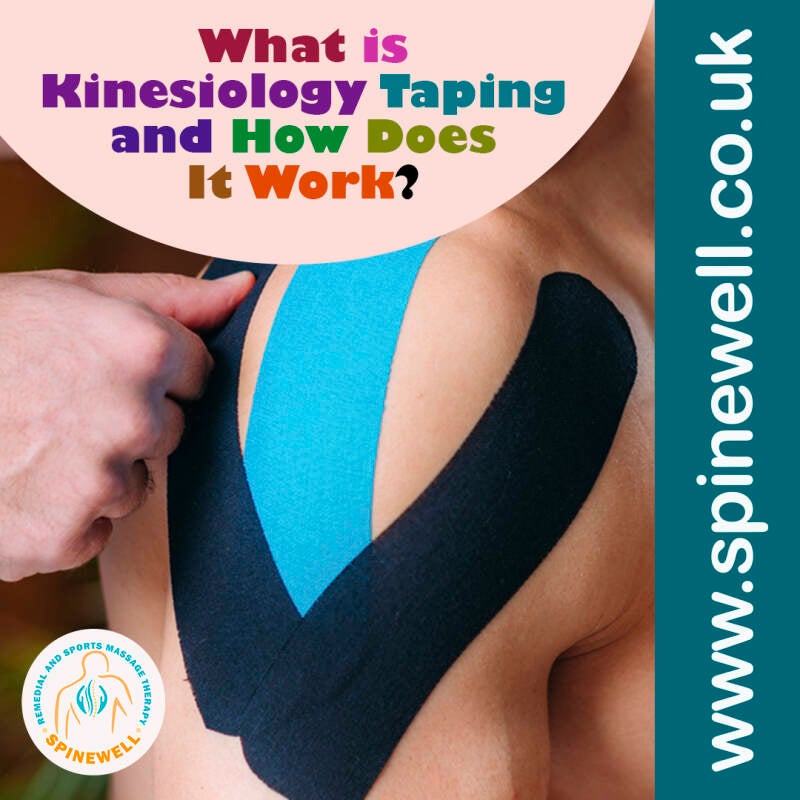
Yesterday, while applying kinesiology tape to one of my patients, I realised something interesting: I have never actually written an explanation on my blog about what kinesiology taping is and how it works during treatment.
So I decided to correct that today.
Kinesiology taping is a physiotherapy method that uses special elastic adhesive tapes to support muscles and joints, improve lymphatic drainage and assist recovery without restricting normal movement.
The method was developed in the 1970s by the Japanese doctor Kenzo Kase. In its early years it was used mainly in professional sport. Over time the technique became widely adopted in physiotherapy, rehabilitation and manual therapy practices around the world — including in my clinic.
It is important to understand that kinesiology taping rarely works effectively as a stand-alone therapy. However, when combined with other treatment techniques it can become a powerful and long-lasting addition to the overall treatment plan.
In simple terms, kinesiology taping can be thought of as a continuation of the therapist’s hands working between therapy sessions.
How kinesiology taping works
A correctly applied tape technique can produce several therapeutic effects.
First, the specific application technique creates a lifting effect on the skin in the treated area. This slightly lifts the skin above the underlying tissues, reducing pressure on pain receptors and improving micro-circulation. As a result, the body’s natural recovery processes can work more effectively.
Second, in some situations kinesiology tape can provide a gentle compressive effect. This can help control swelling and maintain therapeutic support in the treated area for a longer period of time.
Third, kinesiology tape can provide functional support for joints. In cases of minor dislocations, subluxations or joint instability, taping can limit excessive movement and reduce the risk of further injury while still allowing functional mobility.
How long does the tape work?
Kinesiology tape is usually worn for 3–5 days.
The tape itself is made from breathable cotton, uses a hypoallergenic acrylic adhesive and is water-resistant. While applied, it works continuously — 24 hours a day.
You can shower, swim, exercise and continue normal daily activities while wearing the tape.
Some people ask why the tape should not be worn longer.
Technically, it is possible to leave the tape on for much longer. However, the body quickly adapts to external stimulation. After several days the therapeutic effect gradually reduces, which is why 3–5 days is considered the optimal duration.
If repeat taping is required, it is usually recommended to allow a short break of several days without tape before re-applying it.
Even if the tape remains on the skin for only an hour after treatment, it can still provide additional therapeutic benefit following the main therapy session.
Does the colour of the tape matter?
Kinesiology tapes are available in many colours and designs. These differences are purely aesthetic — the colour or pattern does not change the therapeutic properties of the tape.
However, I always offer my patients the opportunity to choose the colour themselves. This may seem like a small detail, but psychology also plays a role in recovery. A colour that someone dislikes may create discomfort or irritation, so personal preference is worth considering.
What kinesiology tape actually is
Kinesiology tape is essentially an elastic cotton strip with a hypoallergenic acrylic adhesive layer. It does not contain any medication and it is not soaked with creams or ointments.
It is a safe, painless and non-invasive physiotherapy method that helps extend the therapeutic effects of treatment in a targeted area.
Cost of kinesiology taping in my clinic
In my clinic, kinesiology taping is included in the price of the therapy session. Patients do not pay separately for this technique.
In fact, most therapeutic techniques I use are included within the session price, which is based on the time spent during treatment.
These may include for example:
- kinesiology taping
- acupuncture
- electrical muscle stimulation
- Chinese cupping therapy
The only treatment that is charged separately is shockwave therapy, because it requires specialised medical equipment.
11 / 03 / 2026